
 Image 1 of 1
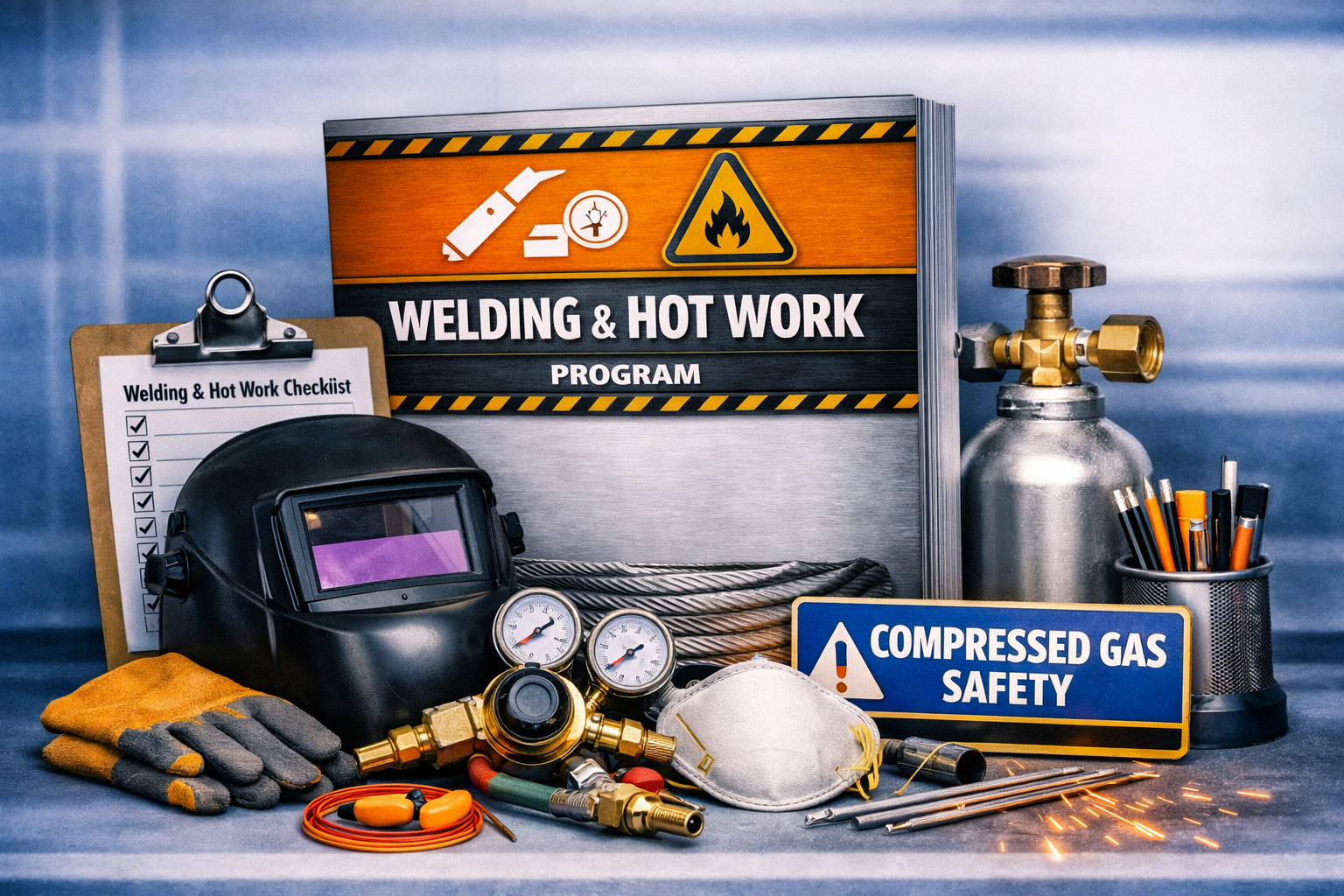
Welding, cutting, and other hot work operations generate intense heat, UV radiation, toxic fumes, and fire/explosion hazards that require a structured, permit-based safety approach. This program covers hot work permit systems, fire prevention requirements, ventilation and fume control, welding PPE, and compressed gas cylinder safety — giving welders, supervisors, and fire watches a complete operational framework.
What's Included:
• Hot work permit system: issuance, conditions, and cancellation procedures
• Fire prevention requirements: combustible clearance zones and fire watch duties
• Ventilation requirements and respiratory protection for welding fumes
• Welding PPE: eye protection, face shields, gloves, flame-resistant clothing selection
• Compressed gas cylinder safety and confined space welding considerations
⚖️ Aligned with OSHA 29 CFR 1910.252–.255 (General Industry) & 29 CFR 1926.350–.354 (Construction)
Welding, cutting, and other hot work operations generate intense heat, UV radiation, toxic fumes, and fire/explosion hazards that require a structured, permit-based safety approach. This program covers hot work permit systems, fire prevention requirements, ventilation and fume control, welding PPE, and compressed gas cylinder safety — giving welders, supervisors, and fire watches a complete operational framework.
What's Included:
• Hot work permit system: issuance, conditions, and cancellation procedures
• Fire prevention requirements: combustible clearance zones and fire watch duties
• Ventilation requirements and respiratory protection for welding fumes
• Welding PPE: eye protection, face shields, gloves, flame-resistant clothing selection
• Compressed gas cylinder safety and confined space welding considerations
⚖️ Aligned with OSHA 29 CFR 1910.252–.255 (General Industry) & 29 CFR 1926.350–.354 (Construction)